Why are landholders becoming more curious about carbon and what could it mean on farm?

Carbon farming is taking shape as a practical land management and farm business resilience opportunity, supported by practical knowledge on how projects work, what is required to set-up a carbon project and how they fit into existing farm operations. For many Southern Queensland landholders the conversation around carbon continues to evolve. A growing share of early adopters of carbon farming who implemented carbon projects over ten years ago are earning additional income and stories of their successes are moving beyond the paddock.
Recent figures from the Clean Energy Regulator underline that this is no longer a fringe activity. As of February 2026, agricultural land management projects had been issued 86,230 Australian Carbon Credit Units (ACCUs) from 56 registered projects, with many of these focused on soil carbon and improved land management. Across vegetation projects, the scale is even greater, with 26,915,109 ACCUs issued from 165 projects. These numbers show that landholders are not just talking about carbon, they are actively including carbon projects in on farm business models for productivity and diversified revenue streams.
However, like any agribusiness there are risks and challenges. Property baselines must be established, contracts and permanence obligations carefully understood, and projects designed so they do not undermine core production goals.
Community concerns remain about issues such as land management under absentee ownership, how large projects might influence weeds and pest management, and what happens when significant areas shift to carbon‑focused activities. These are valid questions that need to be addressed openly.
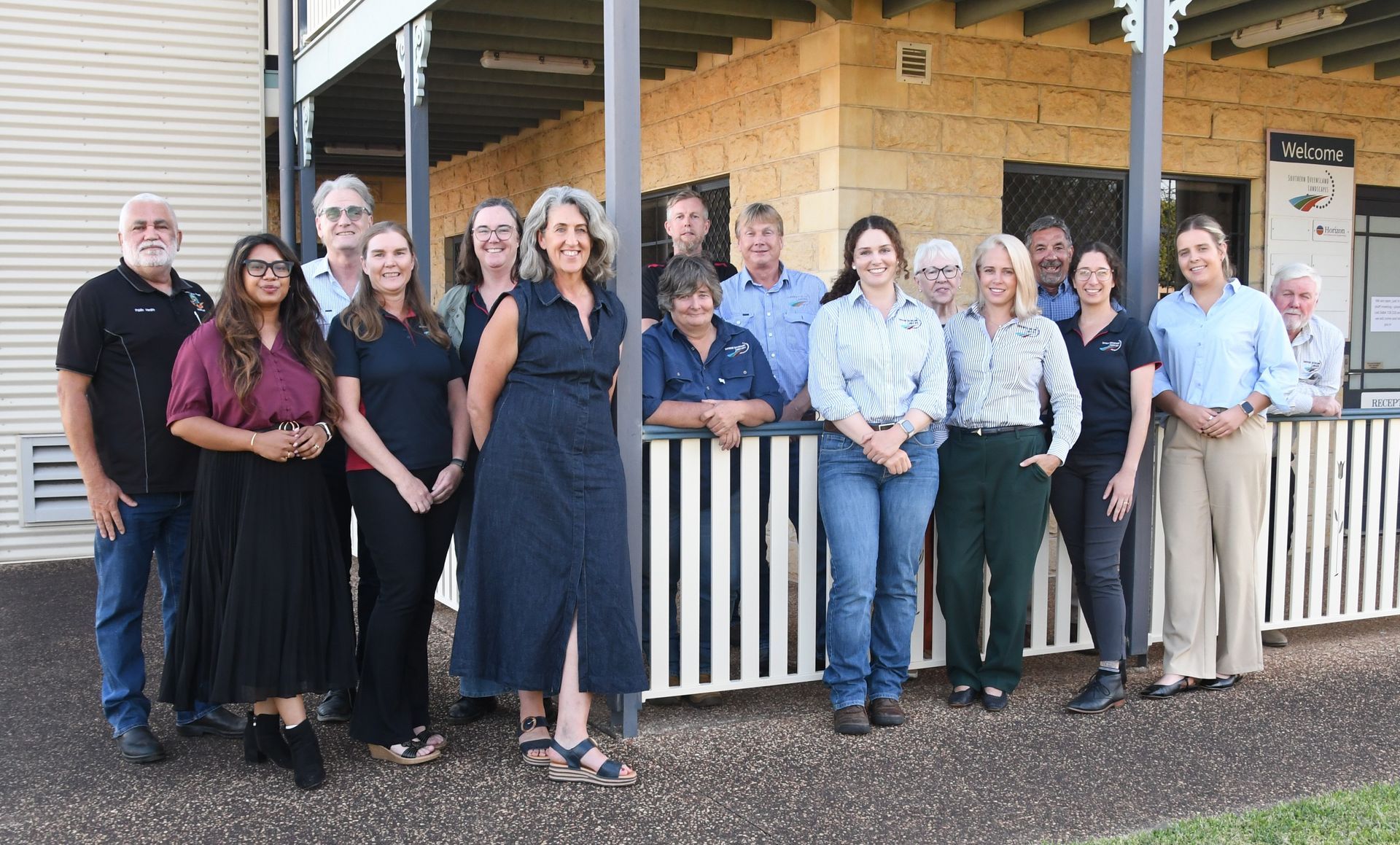
Landholders, in 2026 ask Southern Queensland Landscapes’ Sustainable Agriculture Facilitator similar questions.
What co-benefits carbon projects can deliver?
- Carbon project co-benefits on farm;
- restored native species habitats and corridors,
- land management practices that improve drought,
- erosion and flooding and nature repair market schemes
- and ACCU’s trading that provide additional fiscal incentives.
The mix of interest and caution is an opportunity for Southern Queensland Landscapes to drive a program of awareness events on the topic of carbon farming, with subject matter partners. There is a need to bring up to date methods and information to help landholders understand the balance of benefits and risks before they commit to a carbon project on farm.
Carbon farming projects need to align to the regional Natural Resource Management Plan, which provides a framework for delivery of co-benefits to local environment, rural communities, landscape and economy.
Video Title
Video description text goes here.
Article References:
https://cer.gov.au/markets/reports-and-data/accu-project-and-contract-register
Guidance for landholders: A checklist for partnering on carbon farming projects
Sustainable Agriculture Facilitators are supported by the Australian Government through funding from the Natural Heritage Trust under the Climate-Smart Agriculture Program.