Cool Burning FAQs
List of Services
-
What is this program and why should I get involved? We partner landholders in Southern Queensland with First Nations Fire Practitioners who use cool burning to improve pasture and manage weeds. You receive on-ground expertise delivered to your property at no direct cost. Landholders who have completed previous program with coolburning component consistently report improved ground cover and reduced weed pressure.What is this program and why should I get involved?
-
What is the difference between Cool burn and Cultural burns? Cool burning refers to a low-intensity fire that burns slowly and close to the ground, helping reduce fuel loads and managing weed while protecting soil, roots, canopy and habitat. Cultural burning is broader: it is a Traditional Aboriginal land management practice guided by Traditional Owners, cultural knowledge, seasonal cues and responsibilities to Country. In simple terms, cool burning describes the fire behaviour, while cultural burning describes the cultural, ecological and knowledge-led practice that often uses cool fire to care for Country.What is the difference between Cool burn and Cultural burns?
-
What does cool burning actually do for my pasture? A cool burn removes dead thatch and standing dry matter, letting sunlight reach the soil. Native grasses and forbs germinate rapidly afterwards, producing regrowth that is more nutritious and palatable than mature dry feed. Research confirms fire increases above-ground productivity and stimulates deeper root systems in perennial native grasses, building drought resilience season by season. Outcomes will vary depending on the current health of your country and the condition of existing native grass stands - your Fire Practitioner will assess this during the initial visit. Rest the burnt paddock for 4-6 weeks before returning stock and you will see the difference.What does cool burning actually do for my pasture?
-
How does it help with weeds? Most introduced weeds did not evolve with fire, most native pasture grasses did. A well-timed cool burn kills weed plants before they set seed, depletes the weed seed bank, and gives native species a competitive head start. Each burn cycle compounds this effect. Outcomes depend on the composition of the existing seed bank, whether it is predominantly native, exotic, or a mix of both and on overall Country health. Your Fire Practitioner will assess the seed bank as part of the initial country visit and discuss realistic expectations with you.How does it help with weeds?
-
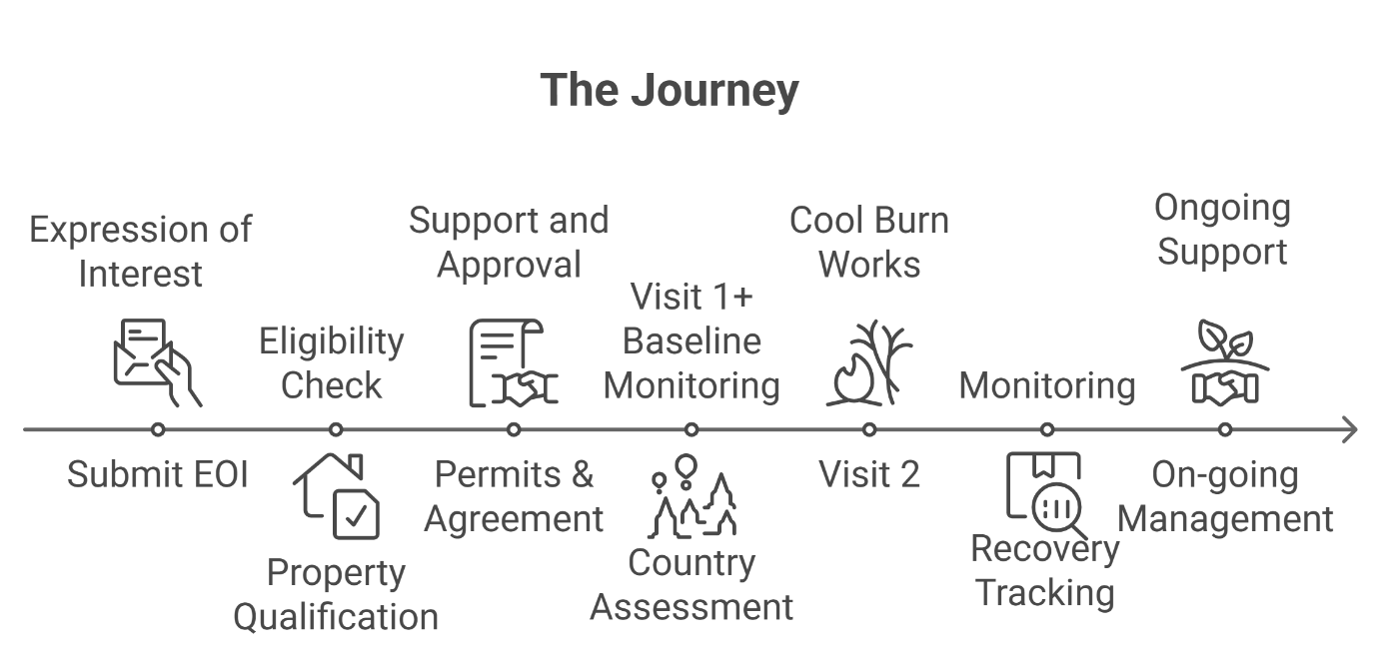
How many visits will there be and what happens at each? There will be two visits for the initial cool burn. Visit 1 - Country assessment: Fire Practitioners walk your property with you, read the vegetation and fuel load, identify areas to burn and areas to protect, and develop a burn plan suited to the condition of your country. Visit 2 - The burn: Fire Practitioners lead the cool burn on your property. You are on site and involved throughout. Geotagged photos are taken. The fire is attended at all times and fully extinguished before anyone leaves. After the burn, rest the paddock before returning stock. The recommended period is 4-6 weeks, though this may vary depending on the health of your country and seasonal conditions, your Fire Practitioner will advise you.How many visits will there be and what happens at each?
-
Do I need a permit? Yes, landholders need obtain the permits. In Queensland, any outdoor fire larger than 2 metres in any direction requires a Permit to Light Fire from the Queensland Fire Department.Do I need a permit?
-
Do I need an agreement? Yes. It will be a non-financial agreement with Southern Queensland Landscapes. This gives us and our contractors to be on your property with your permission to do monitoring and the works. You will be informed every step of the way.Do I need an agreement?
-
Is there a cost to me? No direct cost to you. We funds the Fire practitioner engagement, project planning, mapping and monitoring.Is there a cost to me?
-
What are landholder responsibilities? Your responsibilities are: • obtaining the permit (free) • adhering to the permit conditions (eg. fire breaks, water) • preparing the site and being present on the dayWhat are landholder responsibilities?
-
What about my livestock? Move stock out of the burn paddock at least 24 hours before the burn. After the burn, rest the paddock for a minimum of 4-6 weeks for maximum pasture recovery.What about my livestock?
-
What if the weather is unconducive on the day? We reschedule. Fire practitioners will not light a fire if Country is not ready and conditions are outside the permit window. Your agreement timeline allows flexibility for this. Safety and getting the burn right matter more than hitting a specific date.What if the weather is unconducive on the day?
-
Can I join a workshop to learn more first? Yes and we encourage it. We run joint workshops where landholders learn alongside Fire practitioners. Workshops are optional but the landholders who attend them consistently find the program more valuable. Let your project officer know you are interested and we will include you in the next one in your area.Can I join a workshop to learn more first?