Blackfish Project
Fish in Crisis
Current expert opinion finds that River blackfish (Gadopsis marmoratus), the target species for this Recovery Reach, are experiencing severe decline across the entire Murray-Darling Basin and are highly vulnerable to localised extinctions. Thus, the upper Condamine headwaters, being a cool upland area still containing essential habitat, is considered critical for maintaining blackfish presence in Queensland, if not the wider Basin.
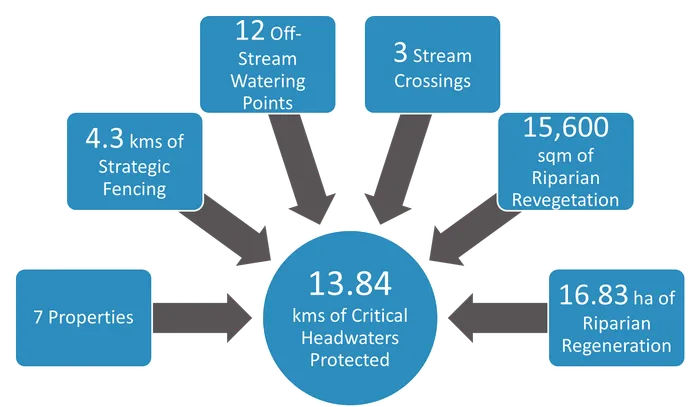
Over two years, Southern Queensland Landscapes will work with land managers to undertake actions on their properties that will reduce sedimentation and increase thermal habitat in streams where blackfish persist to maintain their presence.
WHAT CAN WE DO TO LOOK AFTER BLACKFISH?
River Blackfish (Gadopsis marmoratus), also known as Long Cod, is an important little native fish found in the Condamine River Headwaters near Killarney. Blackfish live in cool, spring fed water and the population is at risk due to the geographic isolation of the populations, climate change and land use. As an indicator of ecosystem health or ‘canary in the Condamine’, landholders have been implementing a number of activities to improve the habitat of Blackfish.
Nikki Longcod Keep Swimmin'
Josh Arnold and students from Killarney P-10 S.S.
Golden Guitar winning Australian Country Music artist, Josh Arnold has teamed up with students from Killarney State School to write and produce a music video aimed at highlighting the plight of a tiny native fish at risk of localised extinction.
River blackfish (or Nikki Longcod as they’re known by the locals) have been in severe decline across the entire Murray-Darling Basin; and scientists believe the headwaters of the Condamine, near Killarney, is home to the last populations in Queensland.
Recovering River blackfish with Ren Holz
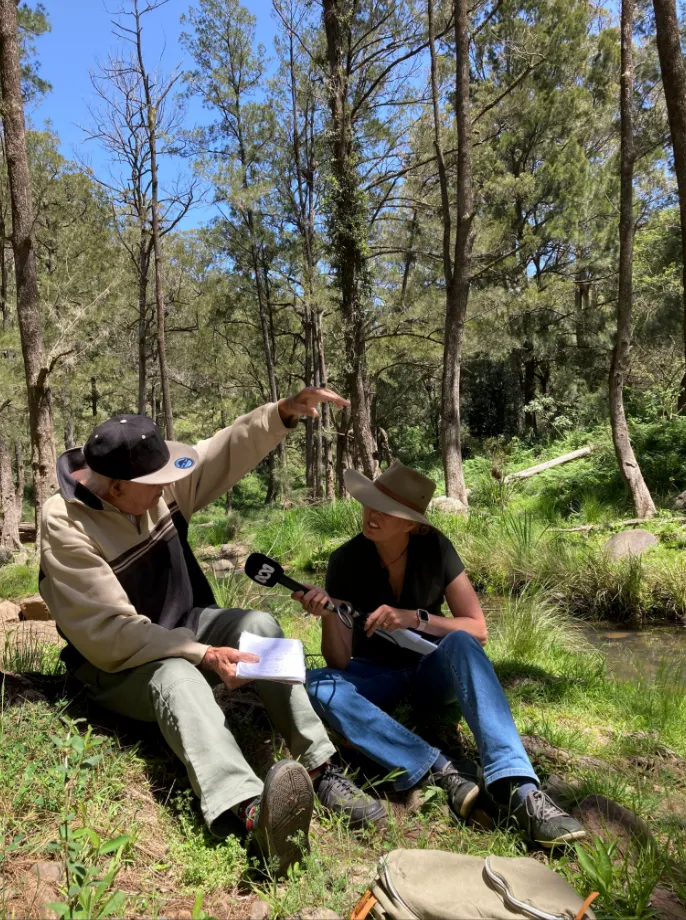
Australian River Recovery Centre catches up with Recovery Reach Coordinator Ren Holz.
SQ Landscapes Project Delivery Officer Ren Holz highlights the importance of recovery efforts to save the River blackfish in the Upper Condamine Recovery Reach.
What is a Recovery Reach?
Click on the icons below to learn more.
Risk is identified
Recovery and persistence of native fish is determined as the primary goal.
OUTCOME ONE
Outcome one aims to ensure there is no further loss of fish species in the Basin as witnessed during the height of the 2019/20 drought. At that time, historically low flows and record temperatures triggered a blackfish rescue operation by the State of Queensland.
In response, this recovery reach aims to employ a range of actions to recover blackfish in Queensland and improve their resilience with respect to future catastrophic events.
Threats are mitigated
Threats to native fish are identified and steps are taken to mitigate.
OUTCOME TWO
While climatic extremes pose risks for all fish species in the Murray-Darling Basin, blackfish are particularly vulnerable owing to shrinkage of their cool climate habitat.
Therefore risk mitigation for blackfish aims to employ achievable on-ground actions expected to buffer this external threat, by enhancing and extending structural and thermal habitat.
Communities drive change
Communities are actively involved in native fish recovery.
OUTCOME THREE
Southern Queensland Landscapes is a community owned organisation that strives for knowledge sharing and finding novel solutions in all we do. This project aims to employ a blend of contemporary science, Traditional Ecological Knowledge and local understanding, providing a platform for broader awareness raising and custodianship of blackfish, and other aquatic species across the region.
Recovery is underway
Recovery actions are informed by best available knowledge.
OUTCOME FOUR
In line with Outcome Four, recent high-level research programs in the recovery area have provided a strong foundation for targeted actions.
All proposed recovery reach actions must be evidence-driven and guided by leading technical specialists. In practice, actions should also be achievable and mutually beneficial for key stakeholders.
Latest Project News
Recovery efforts at Killarney
Canary in the Condamine
Watch: Blackfish Webinars
Blackfish Shirts
Blackfish Artwork
Small Town Takes Big Steps Towards Recovery of Blackfish Populations
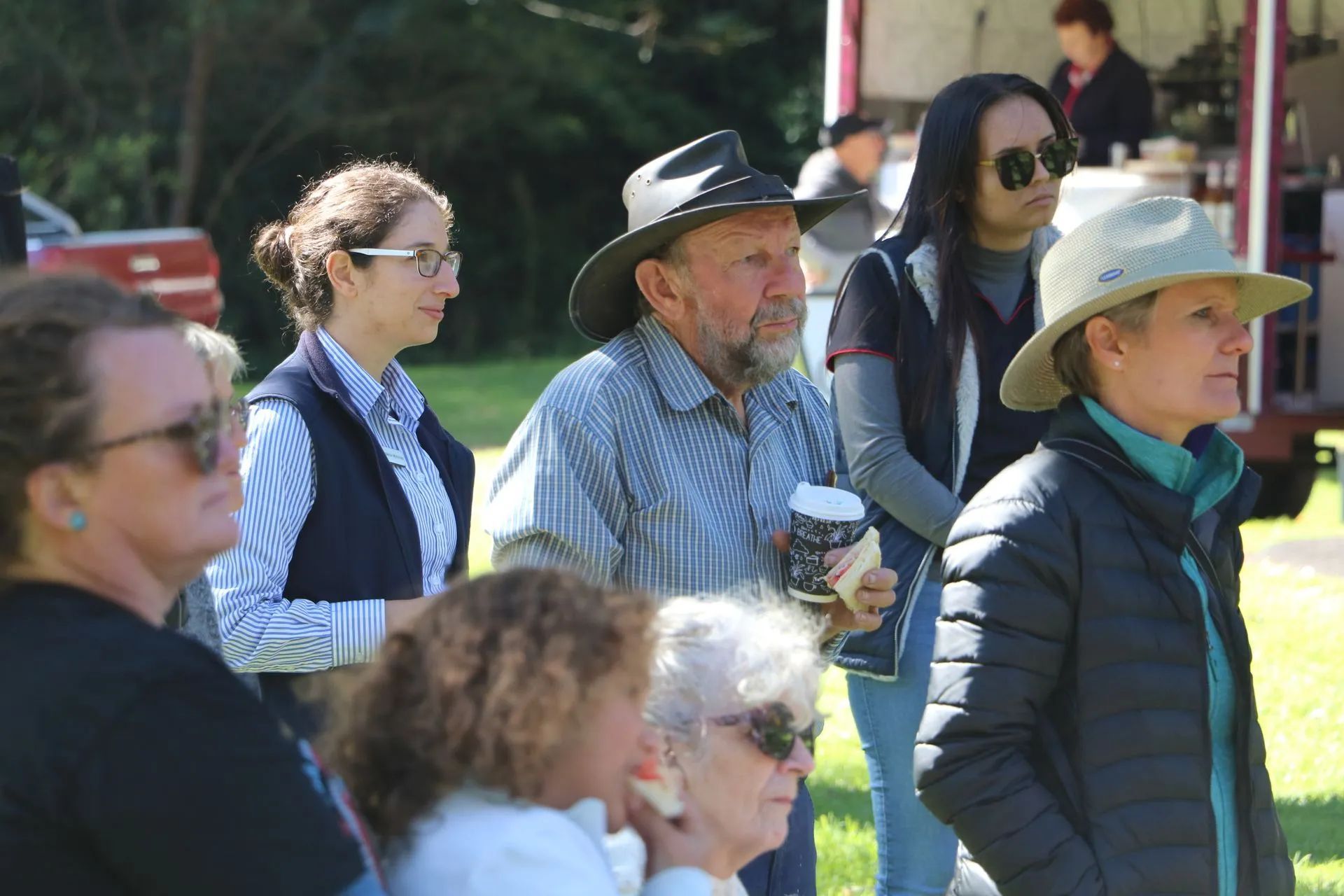
The Killarney community came together at Browns Falls to celebrate the achievements of the River Blackfish project, which saw people from all over the Southern Downs join to save a locally threatened fish species. It’s a success story of hope, science and community coming together.
Over two years, Southern Queensland Landscapes, local land managers, First Nations, government departments, environmental organisations, and members of the community worked together to undertake actions that will reduce sedimentation and increase the thermal habitat in streams - two vital requirements for Blackfish persistence and recovery.
Shrinking blackfish population near Killarney the 'canary in the coal mine'
By ABC Southern Queensland
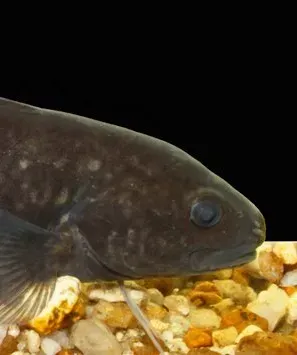
A tiny species of fish once caught by the bucketful in Queensland's upper Condamine River is on the verge of extinction.
Scientists are worried the northern river blackfish – more commonly known as the nicky fish or the nicky long cod – could be the signalling an environmental collapse in the Murray-Darling Basin river system.
The species, already highly vulnerable to localised extinctions, is in severe decline.
Over the next two years Southern Queensland Landscapes will try to reduce sediment and increase natural habitat in the streams where the fish still live, including in Killarney, at the headwaters of the Condamine River in Southern Queensland.
Griffith University research fellow Mishca Turshwell hopes more people learn about the species as the effort to save it ramps up.
"They're an interesting little critter and, I think, definitely under-appreciated and undervalued," he said.
Watch: Blackfish Webinars
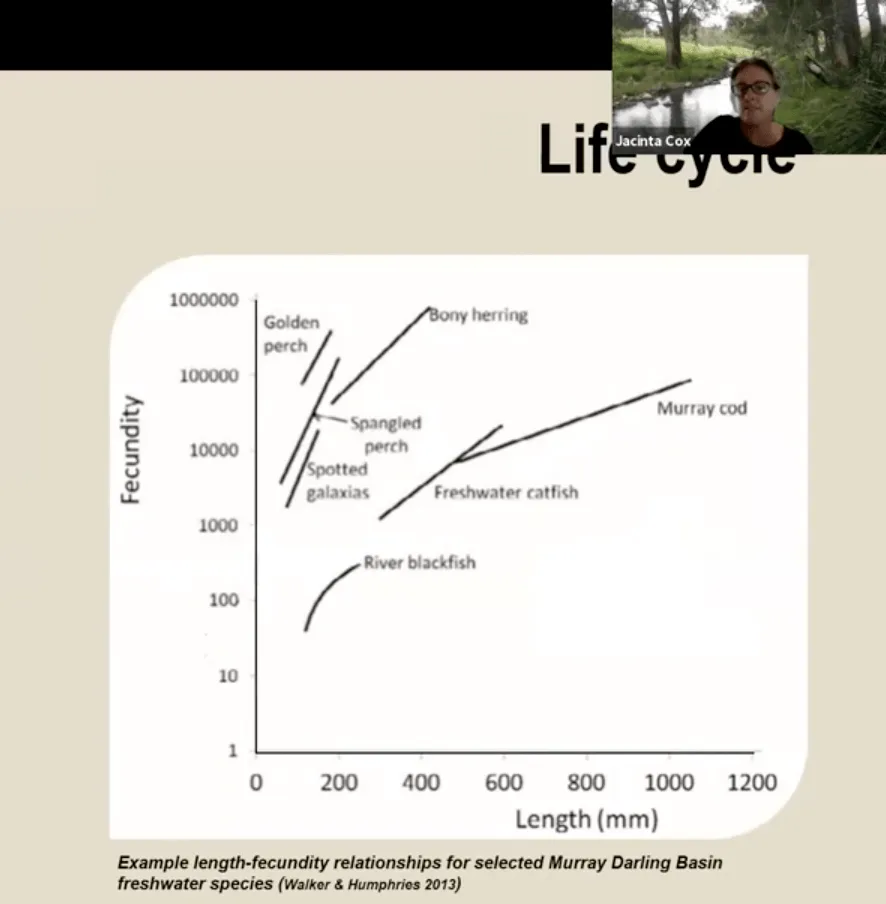
Project coordinator Senior Project Officer Jacinta Cox presented the Condamine Headwaters Recovery Reach to a group of fish enthusiasts with experts from the Aus River Restoration Centre. Watch the recording for free below.
Native fish recovery in the upper Condamine headwaters: https://vimeo.com/646285969
Scientist and President of Australia New Guinea Fishes Association, Dr Peter Unmack lead an exciting discussion on the Mysterious and wonderful fishes of the Upper Condamine including the River blackfish.
Watch the recording for free below.
Mysterious and wonderful fishes of the Upper Condamine: https://vimeo.com/650118583
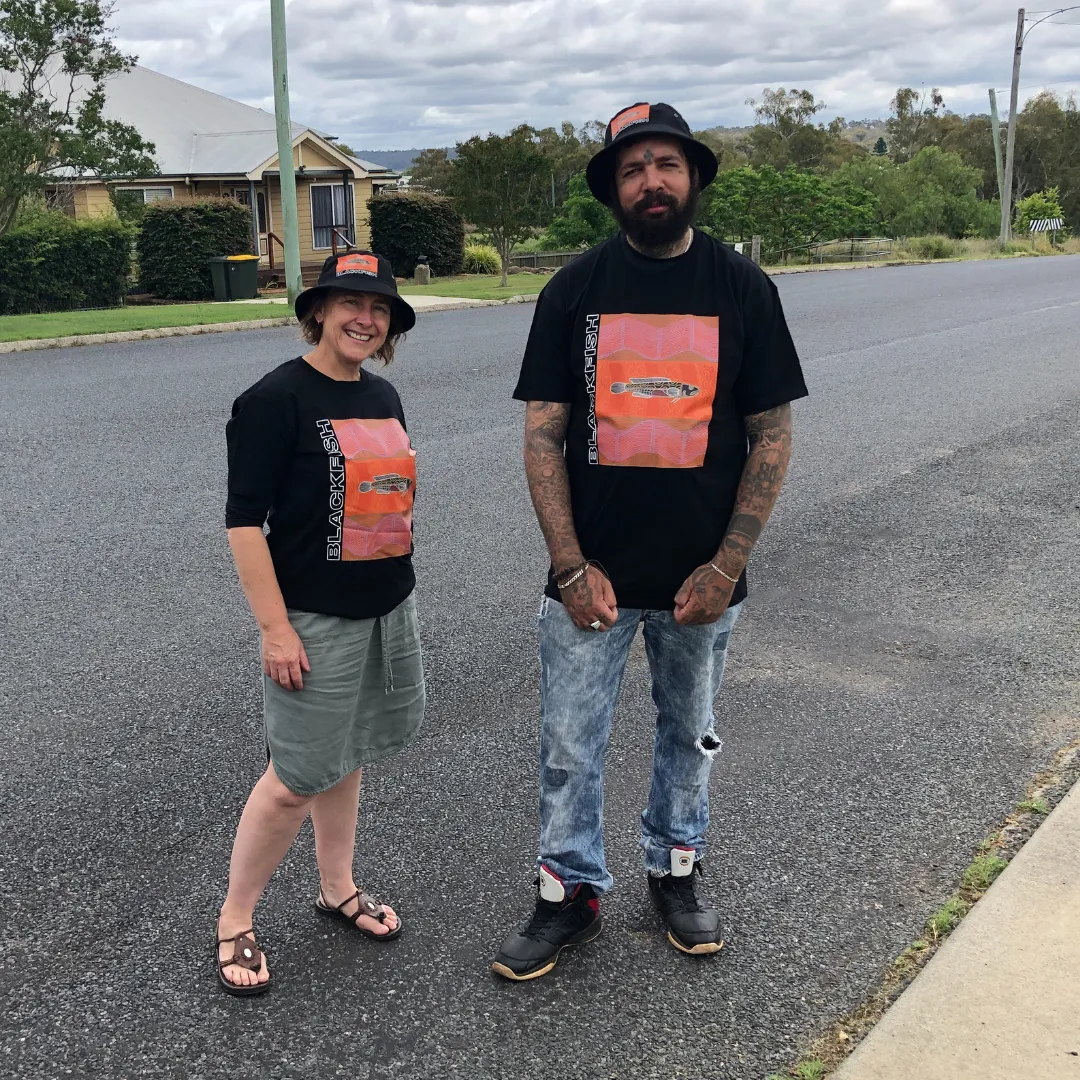
Killarney Locals Secure Limited Edition Shirts
Killarney locals were stoked to receive a free limited edition ‘Blackfish’ shirt when Southern Queensland Landscapes visited recently.
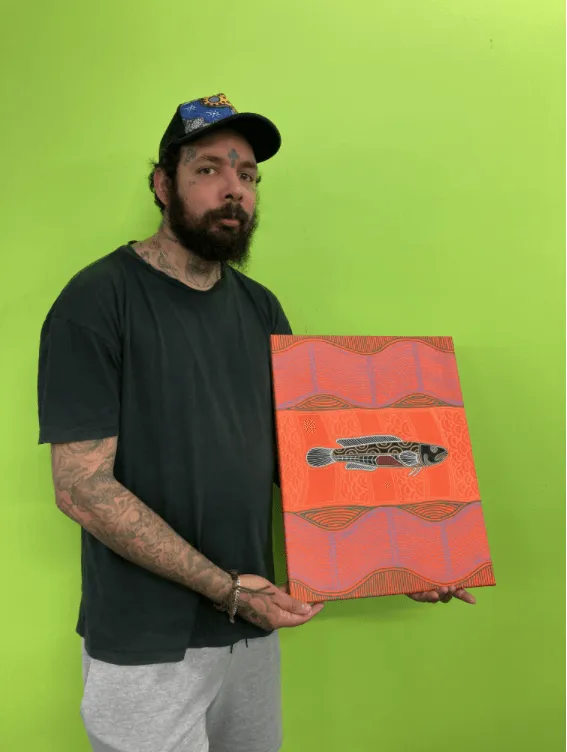
Githabul artist Nathan Charles has been working with SQ Landscapes to create an Aboriginal art piece to visualise the important messages of the project; and his painting called ‘Blackfish’ was used as the centrepiece for the shirts.
Senior Project Officer, Jacinta Cox said the Killarney community have been great advocates for the blackfish project so it’s no surprise they love the shirts too.
The Condamine Headwaters Recovery Project aims to spread awareness about the threatened River blackfish (Gadopsis marmoratus) and equip land managers and the community with the knowledge to halt the population decline of blackfish and protect them into the future.
The project aims to spread awareness about the threatened river blackfish (Gadopsis marmoratus) in the Condamine Headwaters.
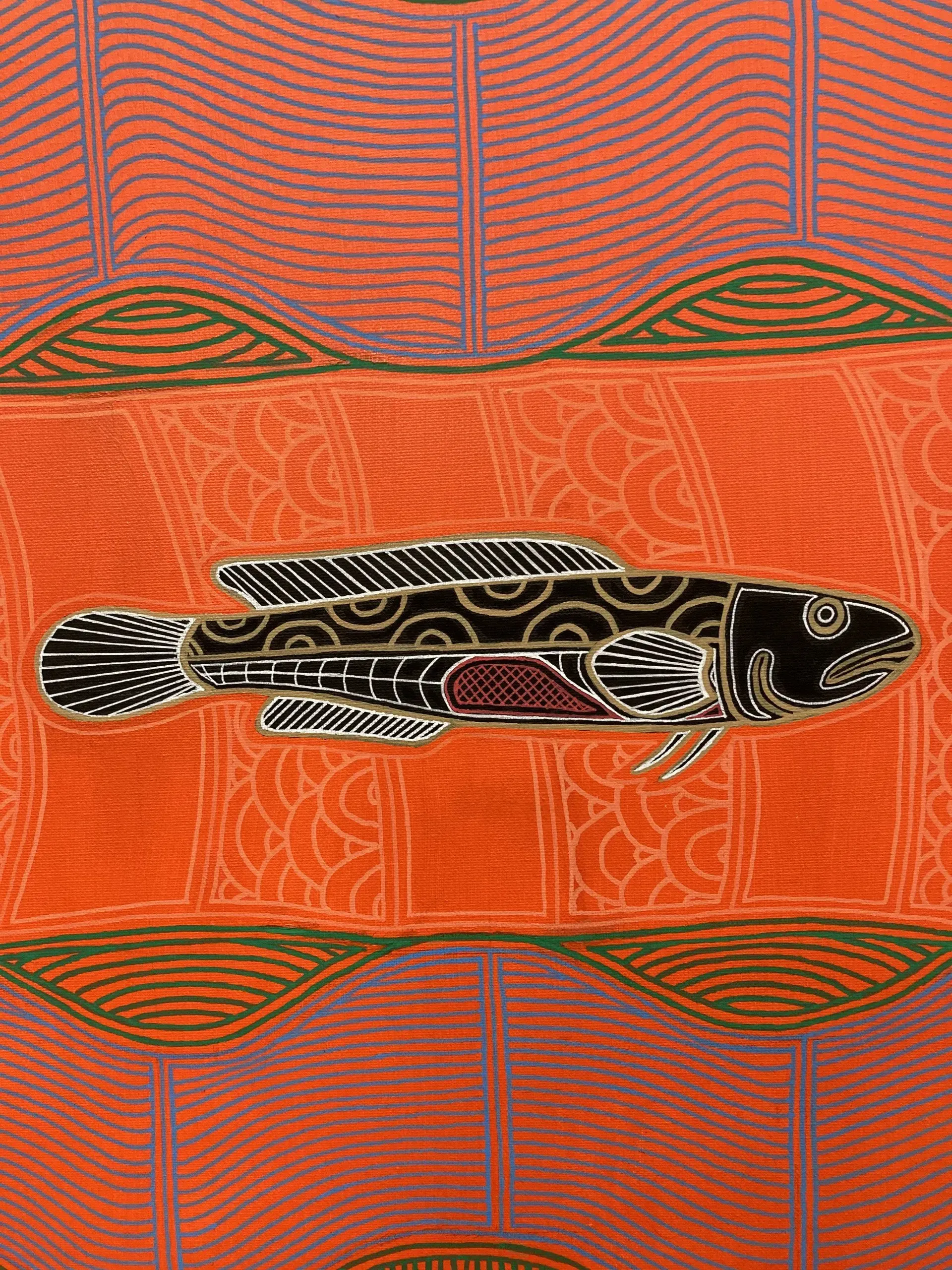
Githabul Artist Highlights Plight of Blackfish Through Art
River blackfish are in severe decline across the entire Murray-Darling Basin with some populations at high risk of localised extinction including those in the Condamine headwaters near Killarney.
That is the stark reality Githabul artist Nathan Charles wanted to portray through his piece ‘Blackfish’, when Southern Queensland Landscapes invited him and the Githabul Nation to help spread the word about the plight of this elusive yet charismatic native fish.
“I am so excited to be working with Southern Queensland Landscapes to help tell people about the blackfish that lives in the headwaters near Killarney and spread the message that if we don’t do something they will be gone,” Nathan Charles said.
“I was inspired by the description of the blackfish as ‘the canary in the coal mine’; which I believe means that the blackfish are an early warning sign of major changes in nature happening right across the catchment. And so I chose to use colours that nature uses to communicate danger or a warning…like reds and oranges,” Mr Charles said.
“As First Peoples we believe every animal has a place; every animal has a role and when one is lost its impact will be felt right across Country; it’s important that we do everything we can to protect our native plants and animals,” he said.
SQ Landscapes Project Coordinator and Freshwater Ecologist Jacinta Cox said the Australian Government is heeding the warning, investing in the region to try and reverse the trend.
Discover What Has Happened
Setting the Scene
Foundations for Change
Working with the Community
Recovering the River blackfish
The Next Steps
Setting the Scene
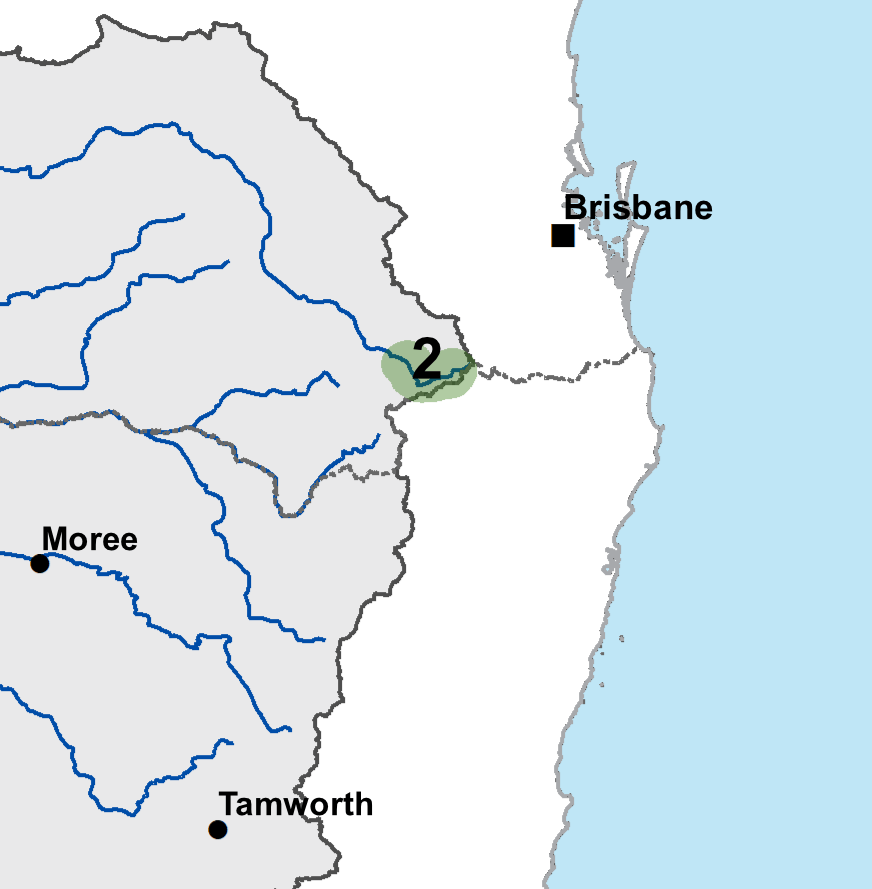
Perched high in the mountainous region of the Condamine Catchment headwaters, the project area is a biodiversity hotspot flanking the QLD/NSW border; a tapestry of highly fertile grazing and cropping operations nestled amongst lush ‘Main Range group’ subtropical rainforest. Here, the Condamine headwater springs form the source of the entire Murray-Darling Basin. Along with the high altitude and forest, the springs give rise to very cold in-stream conditions essential to aquatic species that do not exist in the winding lowland rivers more synonymous with the Murray-Darling.
Home to a stunning array of genera, three niche in-stream species persist in the area; the mountain galaxias(Galaxias olidus), spiny crayfish(Euastacus sulcatus) and the obscure River blackfish (Gadopsis marmoratus).
These species are considered interdependent with each other and are restricted to high altitude streams where temperatures must remain below 28°C, or they cannot survive.
To stay up to date with everything happening with this project and other SQ Landscapes projects in your region, subscribe to our E-newsletter.
Foundations for Change
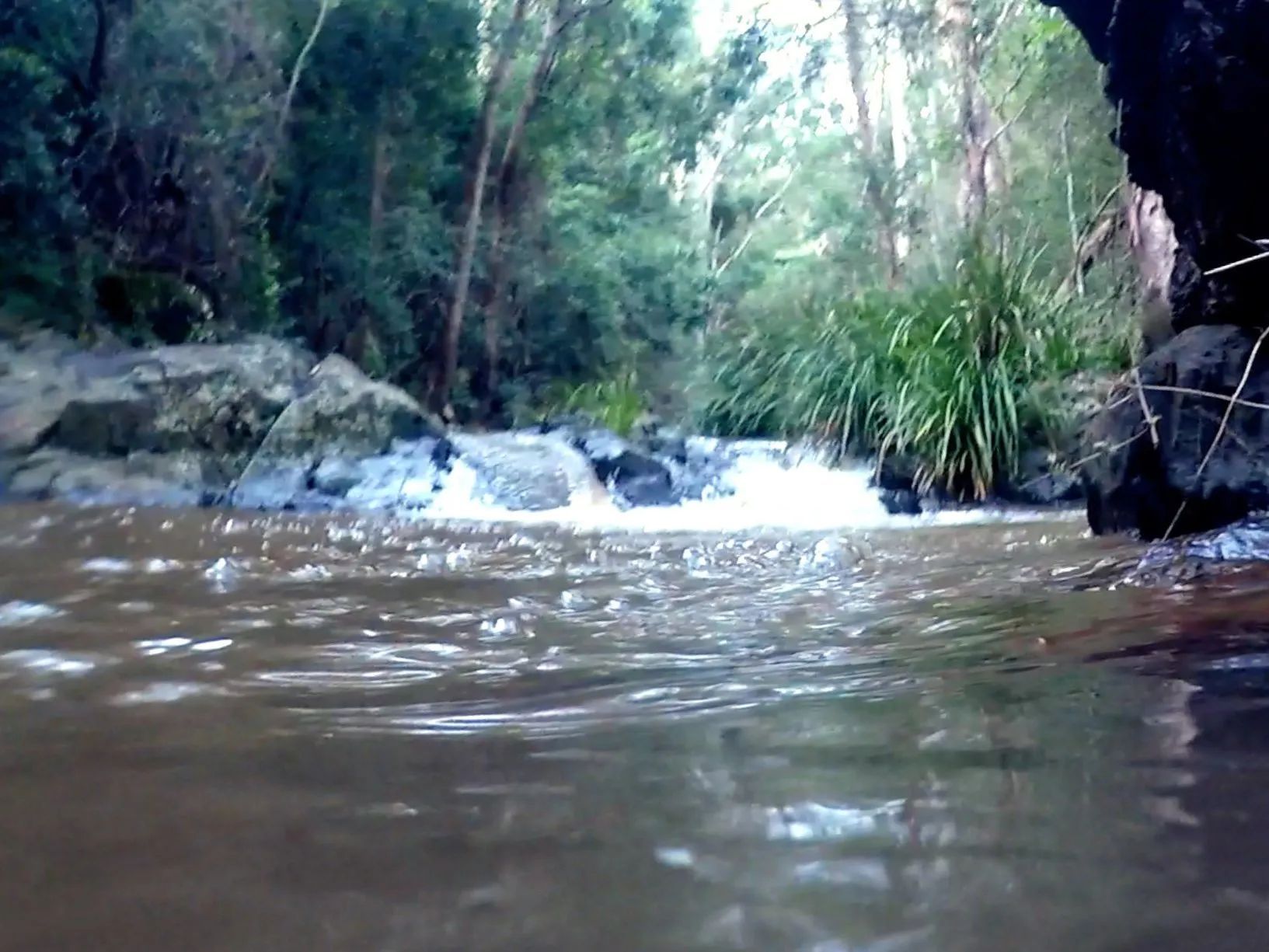
Past research efforts on blackfish in the headwaters indicate local interest in blackfish conservation and allowed for
recent sampling work to establish blackfish presence in the targeted area to proceed. Early engagement efforts also
indicate a limited awareness of the plight of blackfish, and its vulnerability.
Many historical fencing projects, regeneration and pest mitigation activities have been undertaken by proactive landowners in the Condamine headwaters to conserve soil, protect and enhance assets. However, a dedicated fish
conservation initiative of this kind has never been attempted in the headwaters. If it can successfully demonstrate that land managers can continue their operations whilst contributing to conservation, there may be scope to generate similar recovery projects and other opportunities for the community in the future.
Working with the Community
There will be a number of activities with key stakeholders in the Condamine headwaters region to provide on-ground coordination and information sharing across fisheries related activities.
Southern Queensland Landscapes has been working with Githabul artist Nathan Charles to help spread the message about the decline of the river blackfish in the Murray-Darling Basin.
“I am so excited to be working with Southern Queensland Landscapes to help tell people about the blackfish that lives in the headwaters near Killarney and spread the message that if we don’t do something they will be gone,” Nathan Charles said.
“As First Peoples we believe every animal has a place; every animal has a role and when one is lost its impact will be felt right across Country; it’s important that we do everything we can to protect our native plants and animals,” Mr Charles said.
Recovering the River blackfish
Maintenance of blackfish in the Condamine headwaters can succeed only where essential habitat for resident blackfish populations is enhanced, extended, and reconnected – by mitigating impacts of land use and sedimentation on structural and thermal habitat.
Structural habitat is impacted primarily by sediment liberated by clearing for infrastructure, agricultural/pastoral use, and other activities such as recreational 4WDing. Sediment infills streams and deep pools, diminishes protective habitat such as undercut banks and smothers rocks/logs etc. that are essential for egg laying. Decades of sedimentation dramatically alters in-stream form, rendering it uninhabitable for blackfish.
Just as sediment reduces available physical habitat, it also reduces “thermal habitat”. That is, the availability of cool zones where blackfish can retreat during extreme heat events. The predicted increase in average temperatures of 1.17°C by 2030 for the Condamine headwaters region will intensify this threat as evidenced during recent catastrophic drought conditions. Condamine headwater flows had almost completely ceased and record temperatures triggered a blackfish rescue operation by the State of Qld in February 2020.
The Next Steps
Over two years, Southern Queensland Landscapes will work with landowners to undertake actions on their properties that will reduce sedimentation and increase habitat in streams where blackfish persist to maintain their presence.
One or more of several reaches in the Condamine headwaters have been identified for potential target. Of these a significant portion riverine reach in Spring Creek is sought for the first year. Contingent on success and support, an additional reach (also most likely in Spring Creek) will be targeted into the second year.
Southern Queensland Landscapes prides itself on being unbiased and evidence based in all we do. This project refers to a range of comprehensive, published resources including the following citations:
Turschwell, M. P., Balcombe, S. R., Steel, E. A., Sheldon, F., & Peterson, E. E. (2017). Thermal habitat restricts patterns of occurrence in multiple life-stages of a headwater fish. Freshwater Science, 36(2), 402-414. https://doi.org/10.1086/691553.
Turschwell, M. P., Stewart‐Koster, B., Leigh, C., Peterson, E. E., Sheldon, F., & Balcombe, S. R. (2018). Riparian restoration offsets predicted population consequences of climate warming in a threatened headwater fish. Aquatic Conservation: Marine and Freshwater Ecosystems, 28(3), 575-586. https://doi.org/10.1002/aqc.2864
Turschwell, M. P., Stewart-Koster, B., Balcombe, S. R., Sheldon, F., & Peterson, E. E. (2020). Multiscale relationships between stream temperature and juvenile recruitment in an imperilled freshwater fish. Marine and Freshwater Research, 71(10), 1269-1280. https://doi.org/10.1071/MF19149