Coordinated Action Across Southern Queensland
To help protect Brigalow Belt Threatened Ecological Communities (TECs) and associated threatened species, Southern Queensland Landscapes partnered with landholders to deliver coordinated feral pig control across connected landscapes in the Murray–Darling Basin.
Through four aerial control campaigns, more than 100,000 hectares were treated and over 5,000 feral pigs removed. While ongoing monitoring highlighted how quickly populations can recover under favourable conditions, the project reinforced the value of coordinated, landscape-scale management. Participating landholders demonstrated a greater willingness to work together, aligning control activities across neighbouring properties to improve effectiveness and reduce the risk of reinfestation.
> 100,000 ha
treated in coordinated aerial
pest shoots between June
25 - June 2026
> 5000 pigs
removed from Brigalow Belt Threatened Ecological Communities in Southern Qld
86% increase
Feral pig populations increase by up to 86% annually
Feral pigs cause widespread damage to agricultural land and sensitive Brigalow ecosystems.
Feral pigs are one of the most significant pest animal threats facing Southern Queensland. Their impacts are felt across both agricultural landscapes and environmentally important areas, including the Brigalow Belt's Threatened Ecological Communities (TECs). Effective feral pig management plays a vital role in protecting productive farming enterprises while preserving the region's unique biodiversity.
For landholders, feral pigs can cause extensive damage. They destroy crops, disturb soil, damage fencing and water infrastructure, and degrade pastures through rooting and wallowing behaviour. This soil disturbance reduces ground cover, increases erosion risk, and can compromise the long-term productivity of grazing land. These impacts also make it more difficult for producers to implement best-practice grazing management strategies, such as rotational grazing, which are important for maintaining healthy landscapes and reducing pressure on sensitive ecosystems.
The challenge is that feral pigs are highly adaptable, resilient and capable of recovering quickly after control activities. Even with ongoing management efforts, populations can continue to increase when seasonal conditions are favourable. Without sustained and coordinated action, feral pig impacts are likely to worsen, resulting in increased agricultural losses and further degradation of vulnerable ecological communities.
Long-term success requires more than occasional control programs. It relies on landholders, community groups and organisations working together to implement integrated pest management approaches across the landscape. By improving awareness, sharing practical knowledge and supporting the adoption of effective control methods, we can reduce feral pig numbers and help protect the productivity, biodiversity and resilience of Southern Queensland's Brigalow Belt region.
Despite ongoing control efforts, feral pig populations continue to expand across Southern Queensland due to a combination of biological, environmental, and landscape-scale factors.
Despite ongoing control efforts, feral pig populations continue to expand across Southern Queensland. Their success is driven by a combination of biological, environmental and landscape-scale factors that make long-term management challenging.
One of the biggest contributors to the feral pig problem is their remarkable reproductive capacity. Female pigs (sows) can reach sexual maturity at just six months of age and may produce litters of up to 10 piglets, often twice each year. With a gestation period of approximately three months, three weeks and three days, populations can recover quickly following control activities. This means that one-off or isolated control programs are rarely enough to achieve lasting reductions.
The challenge is compounded by the scale of the feral pig population in Australia. An estimated 3.2 million feral pigs are present nationwide, with the majority found in Queensland. Their widespread distribution across private and public land means that fragmented control efforts often have limited impact. Effective management requires coordinated action across property boundaries and land tenures to reduce populations at a landscape scale.
Feral pigs also pose a significant biosecurity risk. In addition to damaging agricultural land and native ecosystems, they can act as carriers of serious diseases, including exotic threats such as Foot-and-Mouth Disease. An outbreak of such diseases could have major consequences for Australia's agricultural industries, regional economies and biodiversity.
Recent seasonal conditions have further accelerated population growth. Five consecutive years of above-average rainfall between 2020 and 2025 created ideal conditions for breeding and survival. Increased water availability, abundant food resources and favourable habitat conditions have enabled feral pig numbers to rise rapidly. Under these conditions, populations can increase by as much as 86 per cent in a single year.
Highly adaptable and resilient, feral pigs can thrive in a wide range of environments, from agricultural landscapes to ecologically significant areas such as Brigalow Threatened Ecological Communities (TECs). Their ability to exploit diverse habitats means they continue to spread and cause impacts across Southern Queensland. Reducing the impacts of feral pigs requires more than short-term control programs. Long-term success depends on coordinated, landscape-scale management supported by ongoing monitoring, strategic planning and collaboration between landholders, community groups and government agencies.
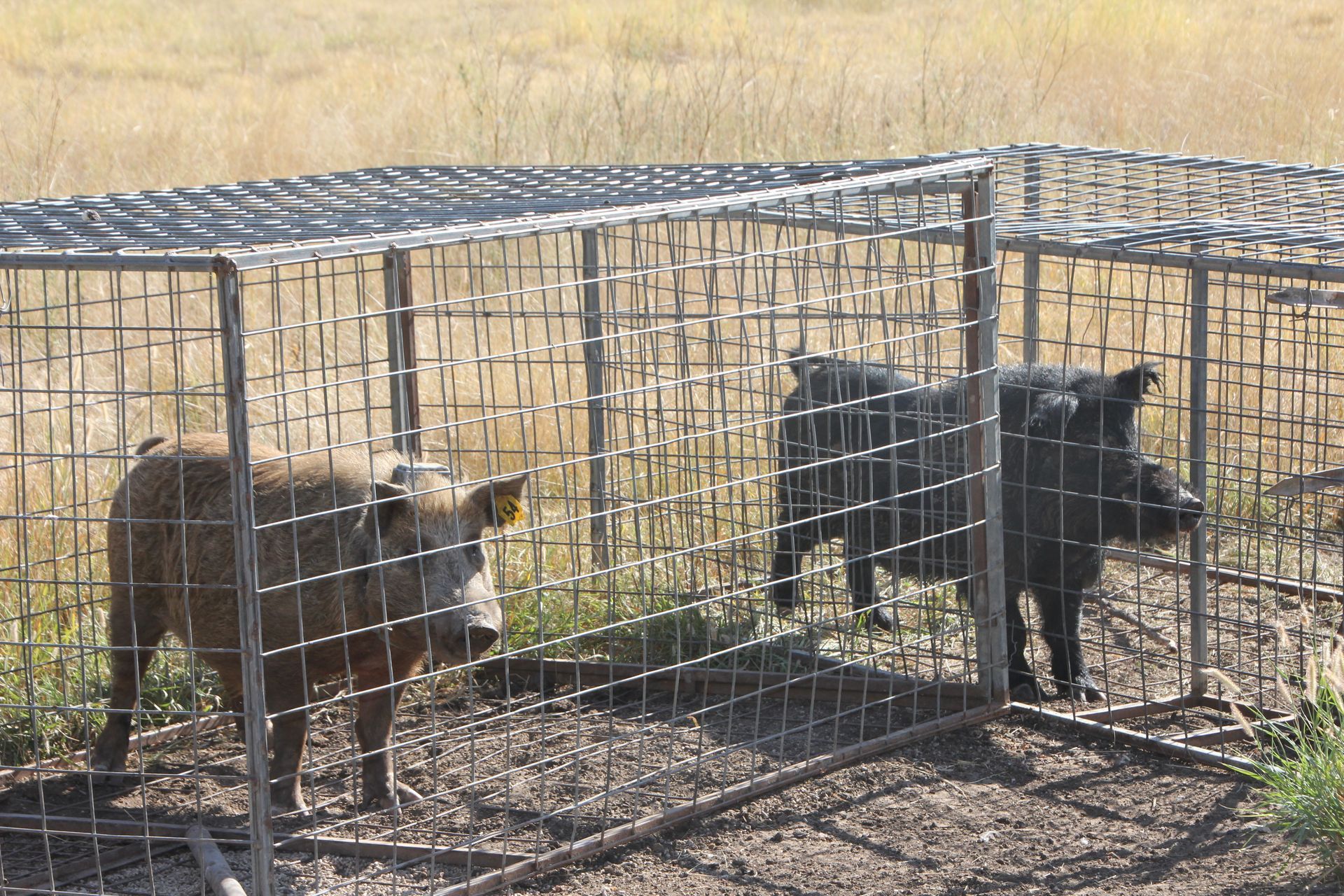
Effective control depends on the consistent adoption of coordinated, best-practice approaches across the landscape.
Core Principles
• Coordinated action across neighbouring properties
• Integrated control methods (aerial control, trapping, baiting, ground shooting)
• Timely intervention following favourable breeding conditions
• Ongoing monitoring, evaluation, and follow-up
Population Recovery Observed After Control
• Demonstrates resilience of feral pigs
• Reinforces need for ongoing, coordinated monitoring and management
Experience across Southern Queensland has shown that effective feral pig management requires more than isolated control efforts on individual properties. Control programs delivered across connected landscapes, including private land, forestry interfaces, National Parks and key waterway corridors, have demonstrated the importance of coordinated action.
Feral pigs move freely across property boundaries and are quick to recolonise areas where control has occurred. As a result, control efforts undertaken by a single landholder or within a limited area can be rapidly undermined by pigs dispersing from neighbouring untreated properties.
For this reason, successful long-term management depends on a coordinated, cross-tenure approach where landholders and organisations work together across the landscape. When neighbouring properties participate in control activities at the same time, the risk of reinvasion is significantly reduced, leading to more effective and lasting outcomes.
Protecting the Brigalow Belt's productive agricultural land and valuable ecological communities will require ongoing collaboration, strategic planning and sustained investment in integrated pest management. By working together, landholders can achieve greater reductions in feral pig populations and help build healthier, more resilient landscapes for future generations.
“Coordinated control is critical – without an “all-in” approach, progress is quickly lost.”
Landowner and Manager in Border Rivers Region
Download the brochure.
Download the project brochure, Managing Feral Pigs to Protect Brigalow Ecosystems.