Natural Resources Investment Program - Vegetation
The Natural Resources Investment Program (NRIP) - Vegetation is a $3.3 million dollar Queensland Government funded program that has been focusing on improving and promoting native vegetation, soil health and ground cover throughout Southern Queensland. Change has been driven through the reduction and management of threats from introduced plant species, feral animals, grazing practices and uncontrolled spontaneous bush fire. Southern Queensland Landscapes has been working with local communities, Aboriginal organisations and land managers over the past four years to finalise all projects under the program by 30 June 2022.
What Have We Achieved To Date?
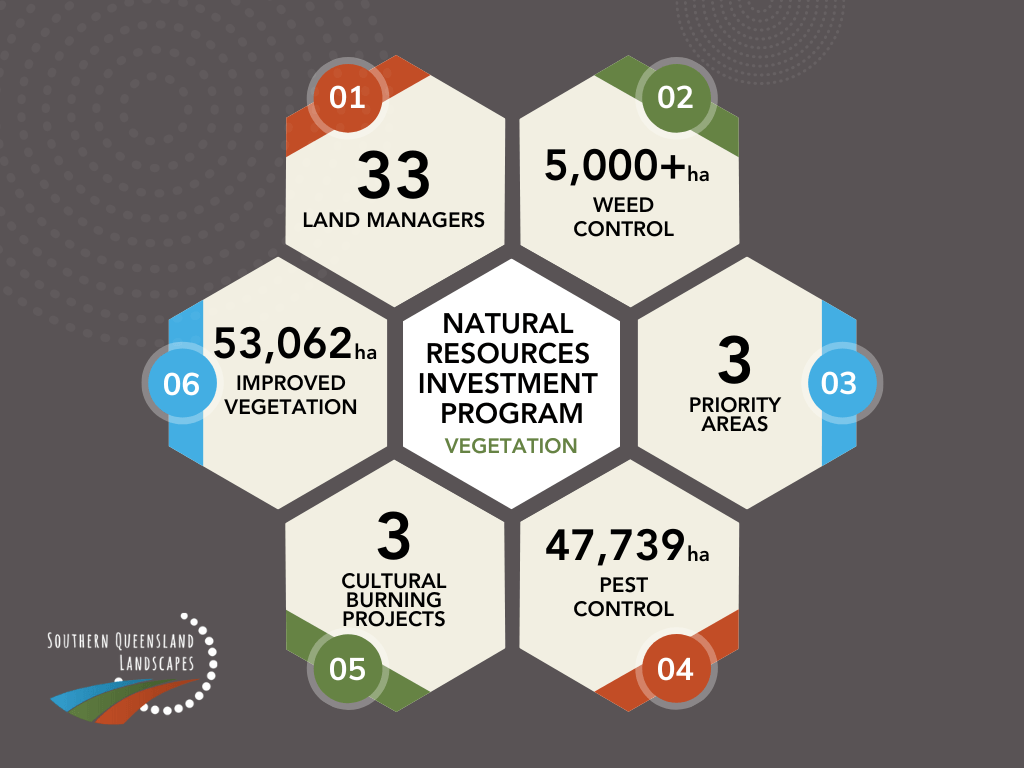
53,062 hectares of improved vegetation has been achieved under the program through projects which have included
5,000+ hectares of weed control, 47,739 hectares of pest control and three cultural burning projects in collaboration with
33 land managers across
three priority areas. These works have made a significant contribution to improving and promoting native vegetation, soil health and ground cover throughout Southern Queensland.
Latest Project News
Working with Local Land Managers
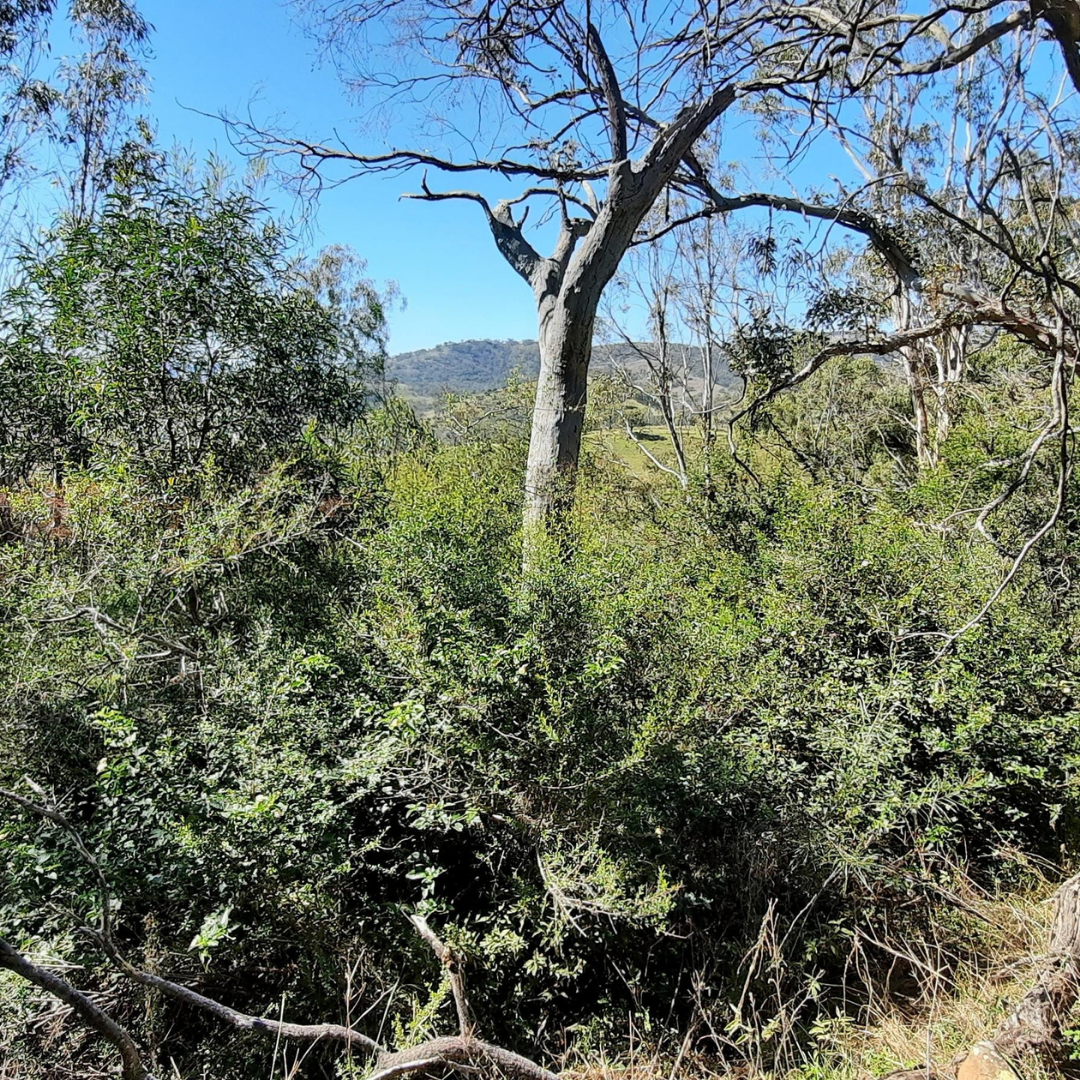
Southern Queensland Landscapes is working with land managers from High Camp Brangus south of Warwick to assess the condition of their relatively untouched native bushland.
Renelle and Nathan at High Camp Brangus are vegetation heroes for keeping their high-value regrowth vegetation uncleared for the past 15 years, allowing the ecosystems (and soil health) to thrive.
These ecosystems are starting to regain the structure and balance of the original systems, and it is vital to continue looking after them.
SQ Landscapes is looking forward to working with the guys at High Camp Brangus to continue improving this beautiful patch they call home.
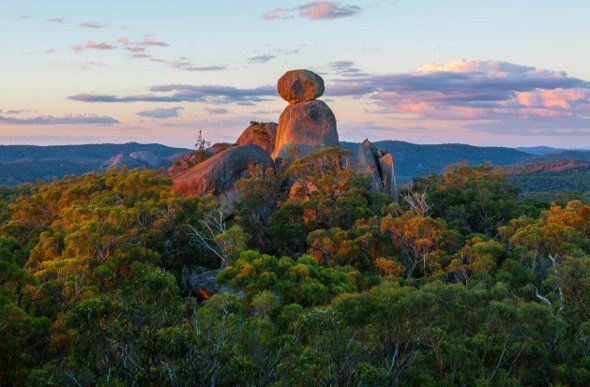
The Coolatai Crusade Continues
The Coolatai Crusade continues! Project Officer Isabella Murphy headed down to her favourite 'office' recently, Girraween National Park, to catch up with neighbouring landholders to help control coolatai grass (Hyparrhenia hirta) infestations.
Southern Queensland Landscapes has been working with Queensland Parks And Wildlife Service to create a buffer zone around Girraween National Park, to protect the high value remnant vegetation and important species that are present within the park.
This particular landholder has been burning off the large stands of Coolatai encroaching on Girraween, and plans to spray them when they start to reshoot.
You can see what a beautiful part of the world they live in, and why they are so invested in protecting this special place.
About the Project
The Natural Resource Investment Program (NRIP) aimed to improve and promote native vegetation through the reduction and management of threats.
Common threats to native vegetation include:
- Invasion of introduced species and feral animals
- Impact by grazing practices
- Bush fire from high fuel loads
Our main threat reduction strategies were:
- Weed control
- Fencing
- Cool burning practices/improved management
Helping land managers take care of their native vegetation is an important focus for SQ Landscapes and we look forward to continuing our work collaborating with land managers through projects like NRIP - Vegetation to affect change across the landscape.
Controlling Tree Pear
Biosecurity Queensland, Toowoomba Regional Council and SQ Landscapes have been collaborating to help reduce the threat of velvety tree pear throughout the region.
SQ Landscapes Project Delivery Officer Isabella Murphy said the tree pear and other forms of cactuses are a huge issue across the landscape.
"We've been doing work through the Natural Resources Investment Program (NRIP), funded by the Queensland Government to try and help land managers get on top of this issue," Isabella Murphy said.
Watch the video and discover the three main methods of controlling velvety tree pear.
What is Native Vegetation?
Australia’s native vegetation is one of the most unique and diverse in the world, with southern Queensland home to a huge range of rich and beautiful ecosystems. This diversity sometimes makes it difficult to distinguish between what is native and what is introduced.
Native vegetation can include:
- Grassland
- Shrubland
- Open forests and woodland - including ecosystems such as semi-evergreen vine thicket and Mulga scrub
REMNANT VEGETATION
We consider certain areas of native vegetation to be ‘remnant vegetation’. This means vegetation that has escaped clearing and remains in a predominantly original state. We want to protect these areas, as these remnant patches are very important, with some individual trees pre-dating European colonisation, and providing an insight into the history of our beautiful country.
HIGH VALUE REGROWTH VEGETATION
'High value regrowth vegetation' is also a focus for SQ Landscapes, and is classified as vegetation that has not been cleared for 15 years. These ecosystems are starting to regain the structure and balance of the original systems, and it is vital to continue looking after them.
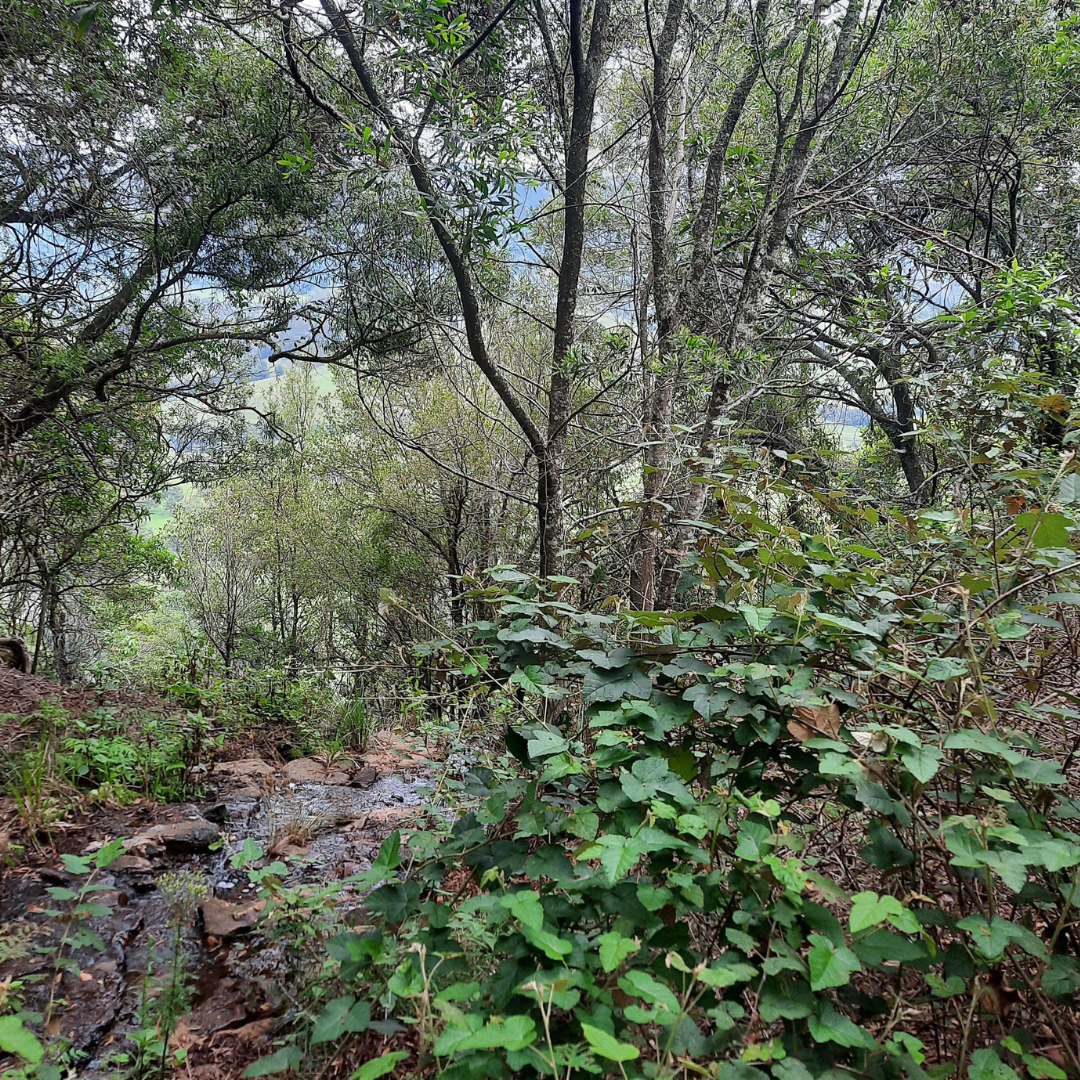
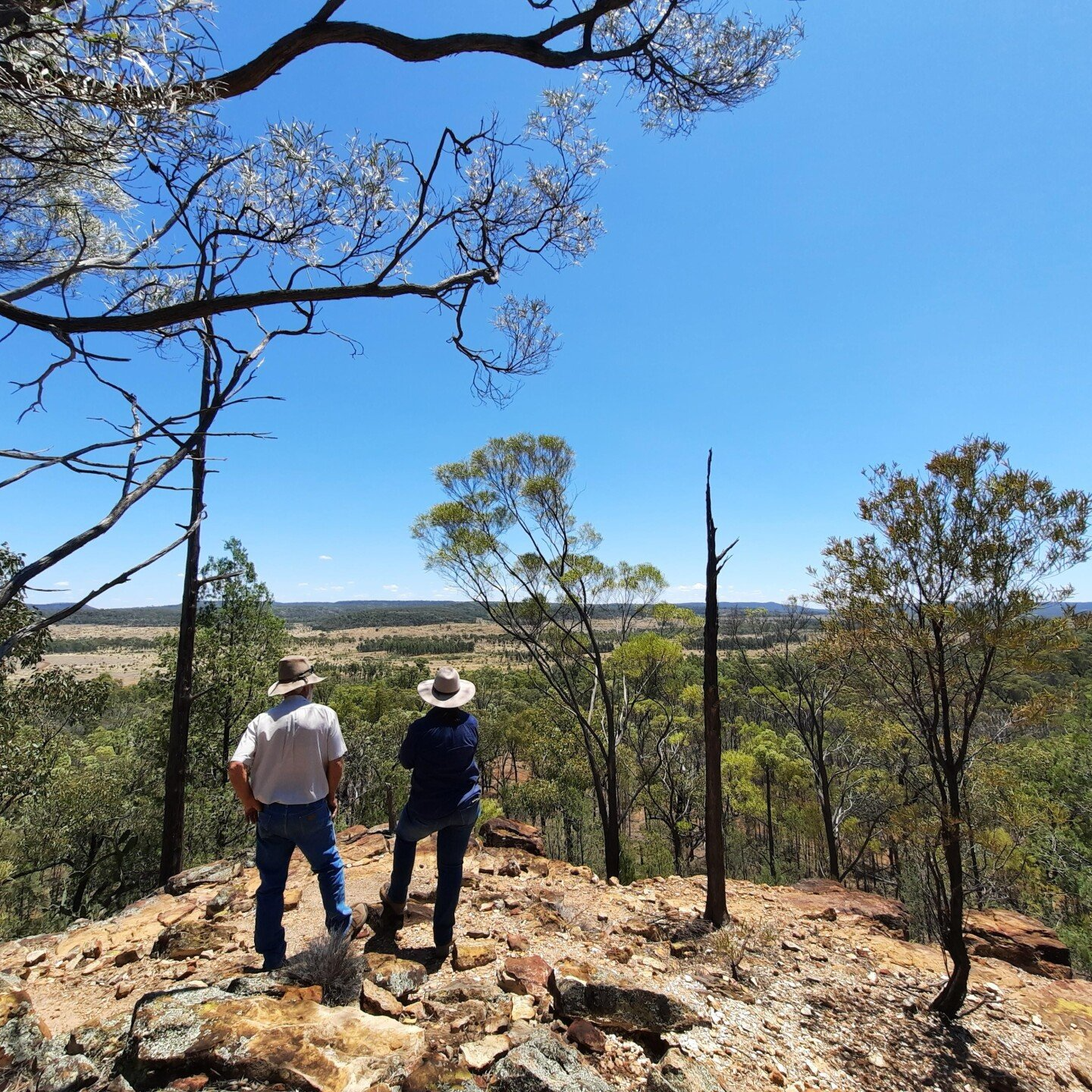
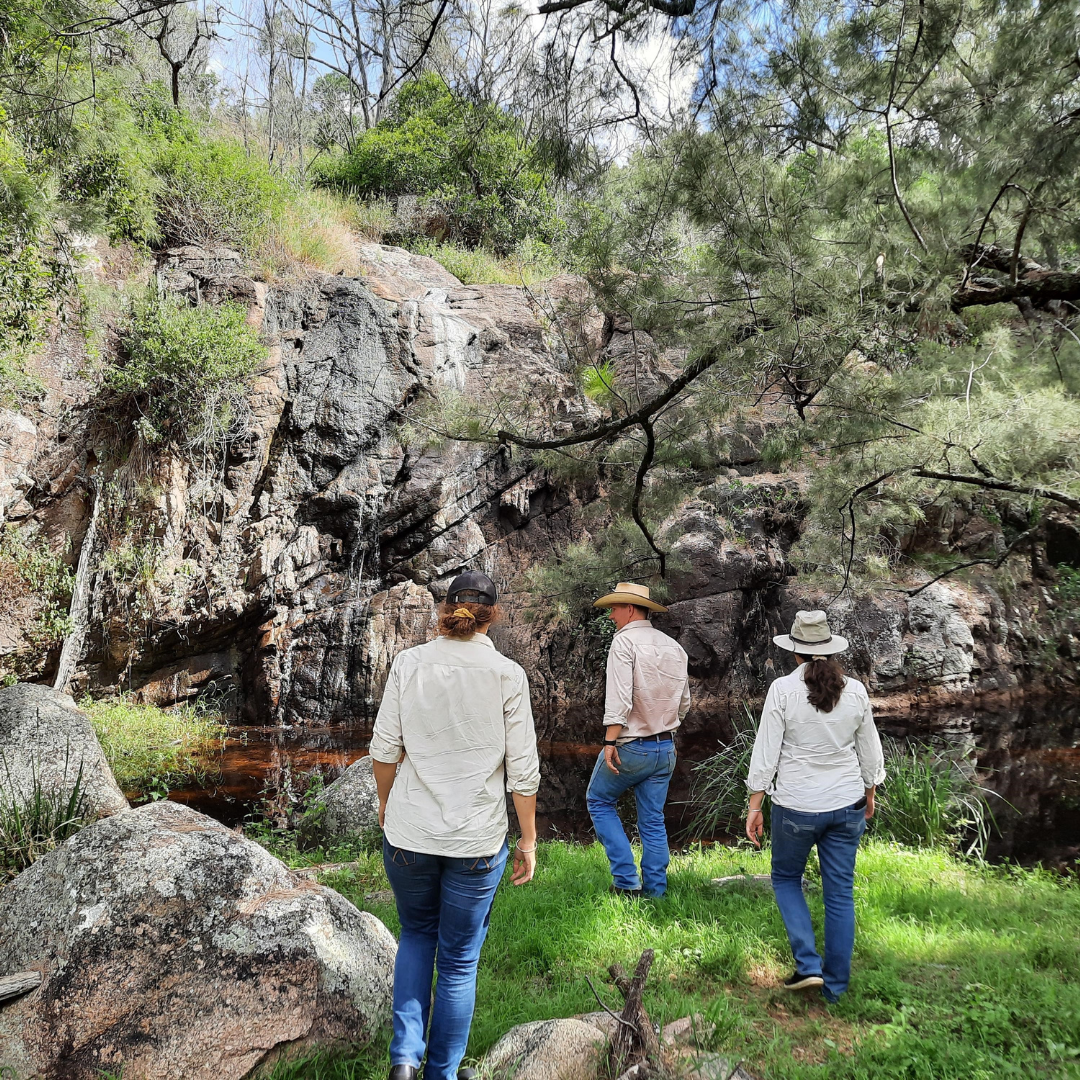
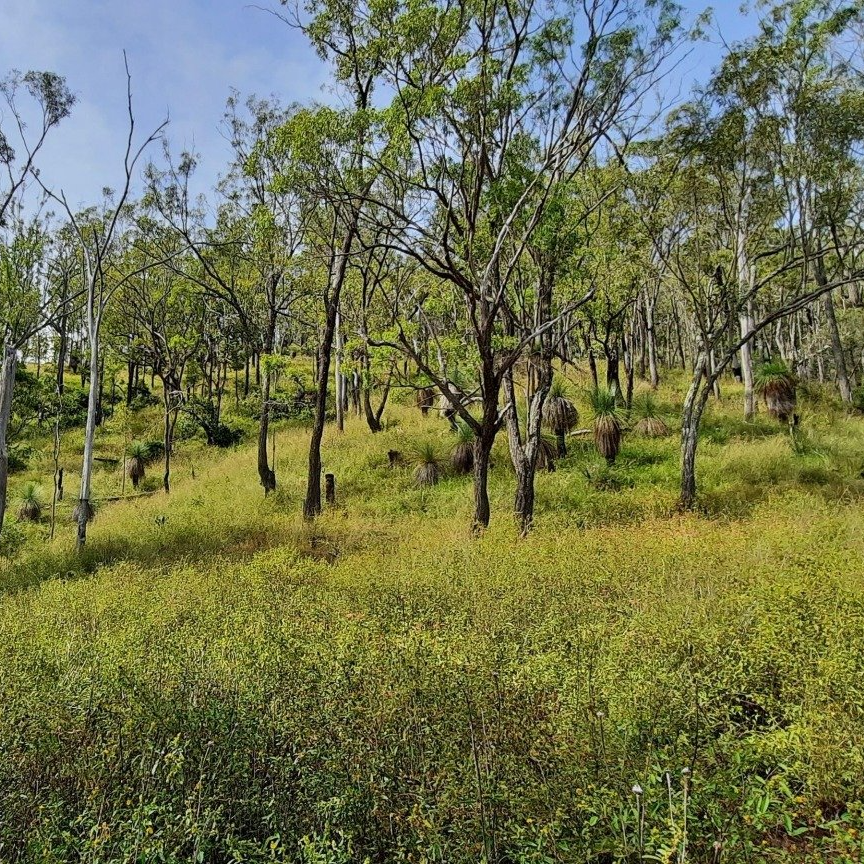
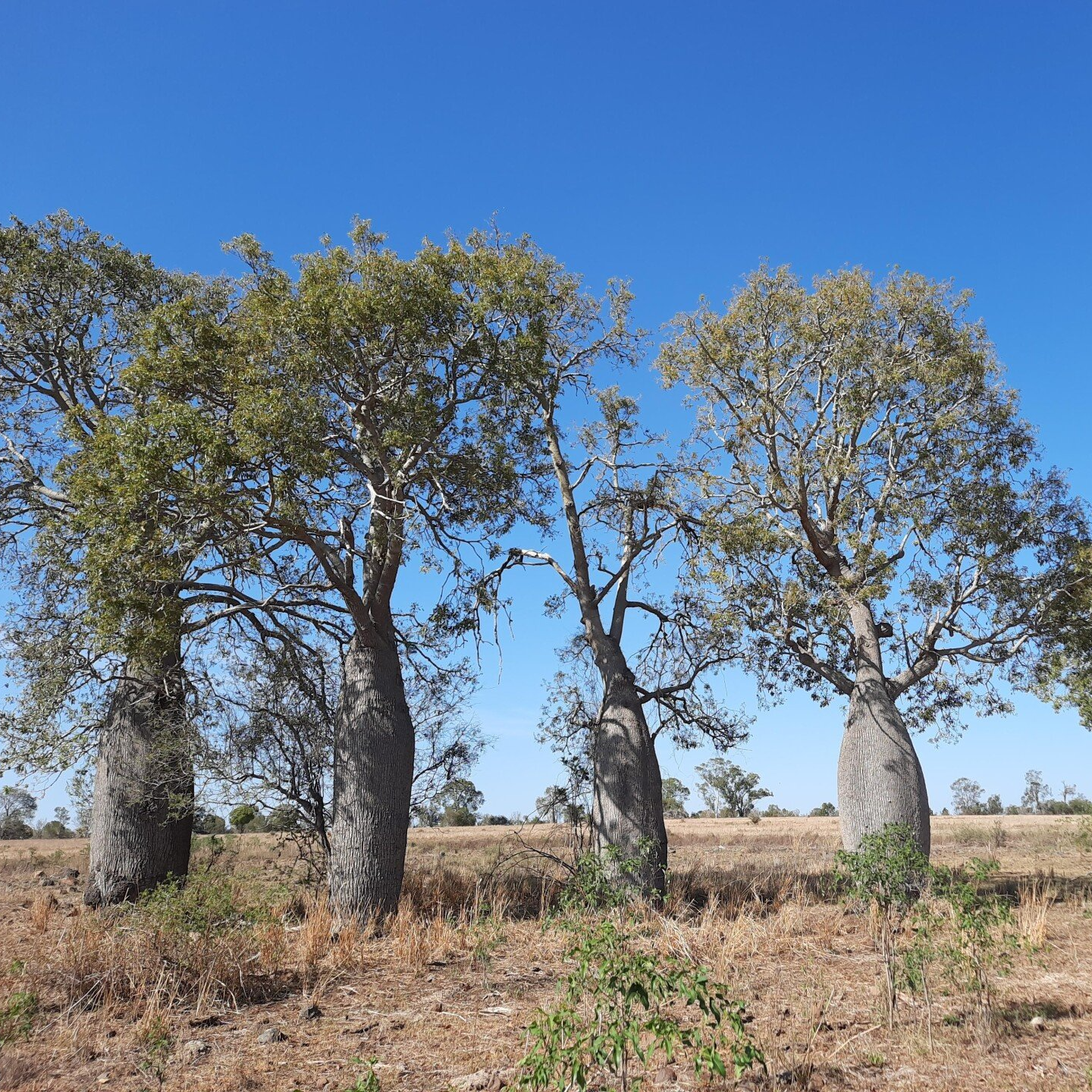
Examples of native vegetation.
Mulching reduces tree pear
Listen as land manager Jenelle Hurley explains how she has been using mulching to reduce tree pear and promote native ground cover on her property near Oakey.
Ms Hurley discusses how chemical solutions weren't really working for her which is why she opted to mulch.
"I tried chemical solutions on this block and I found that once the chemical was in the actual tree pear the tree pear would start to die, but then it would drop its limbs and wherever the limbs dropped on the ground there would be another hundred cactus plants come up," Janelle Hurley said.
Hear Janelle Hurley's full story now.
What are the Threats to Native Vegetation?
Click on the icons below to learn more about how exotic pest species, grazing practises and bushfires affect native vegetation.
This project is funded by the Queensland Government's Natural Resources Investment Program (NRIP).