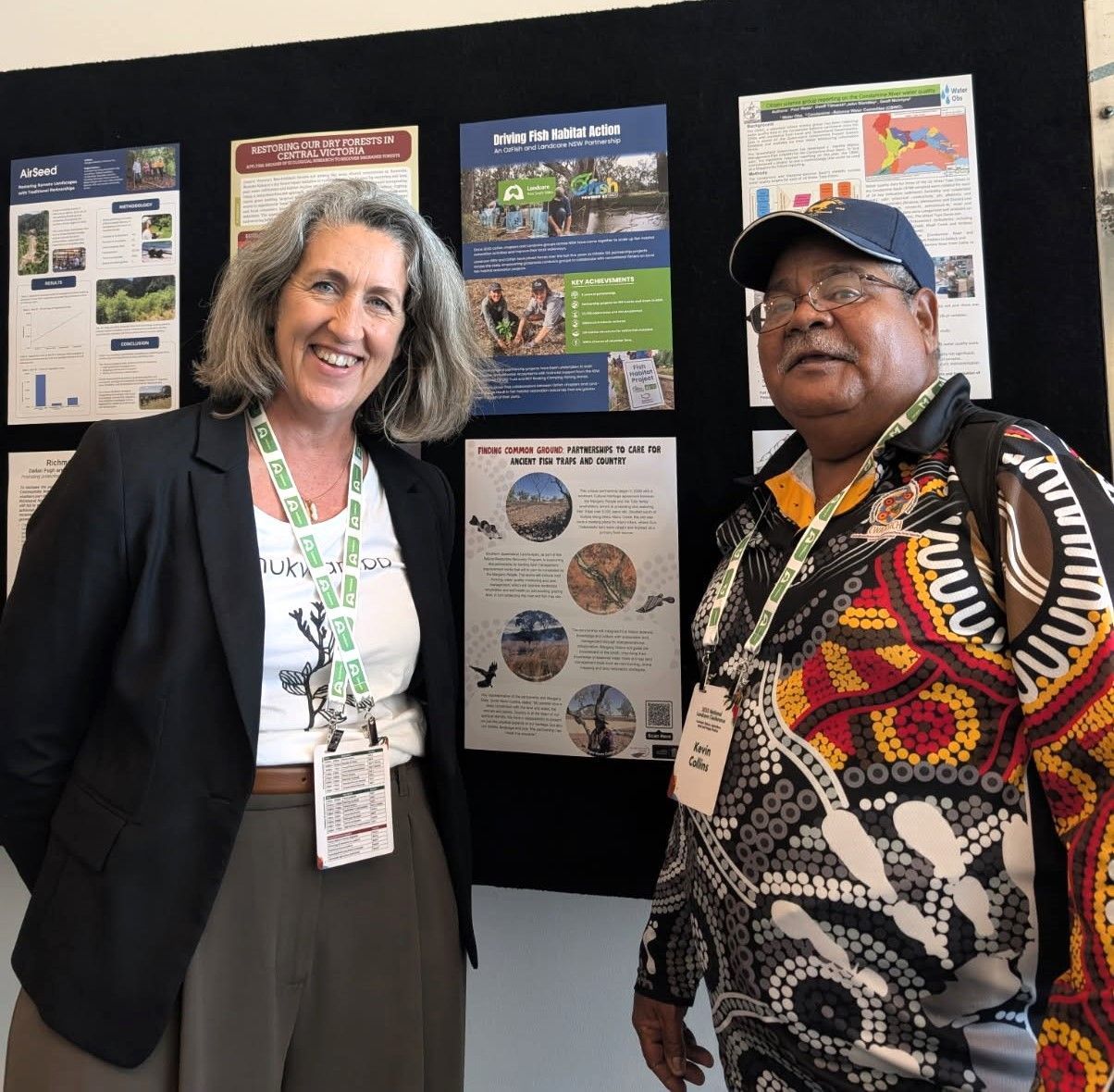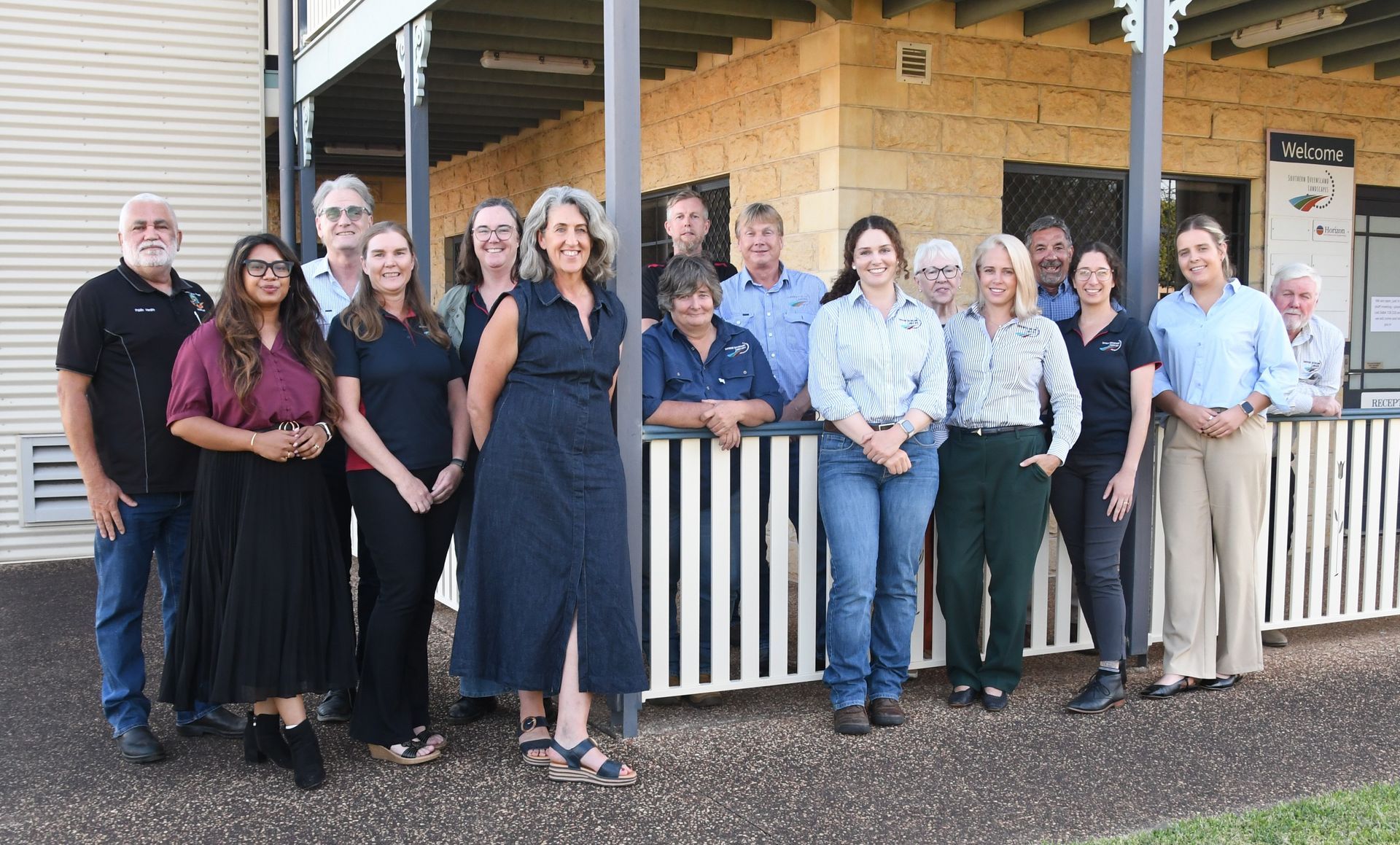
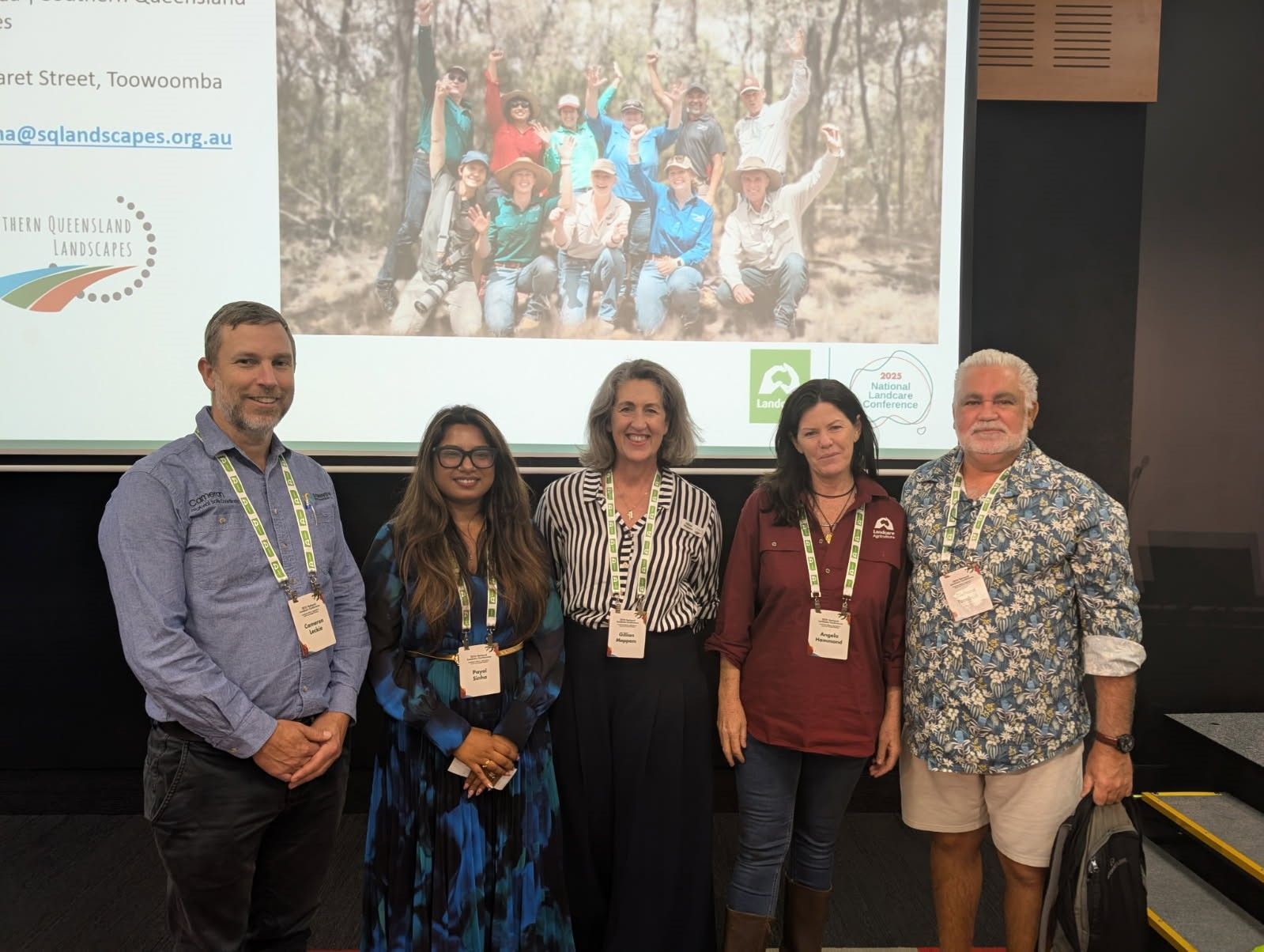
We were honoured to have CEO Gillian Meppem, Richard Turnbull, Dr Payel Sinha and Uncle Kevin, a Margany Elder from near Quilpie, come together on the Gold Coast for this year’s Landcare Conference, representing our vision, work and cultural partnerships across the region.
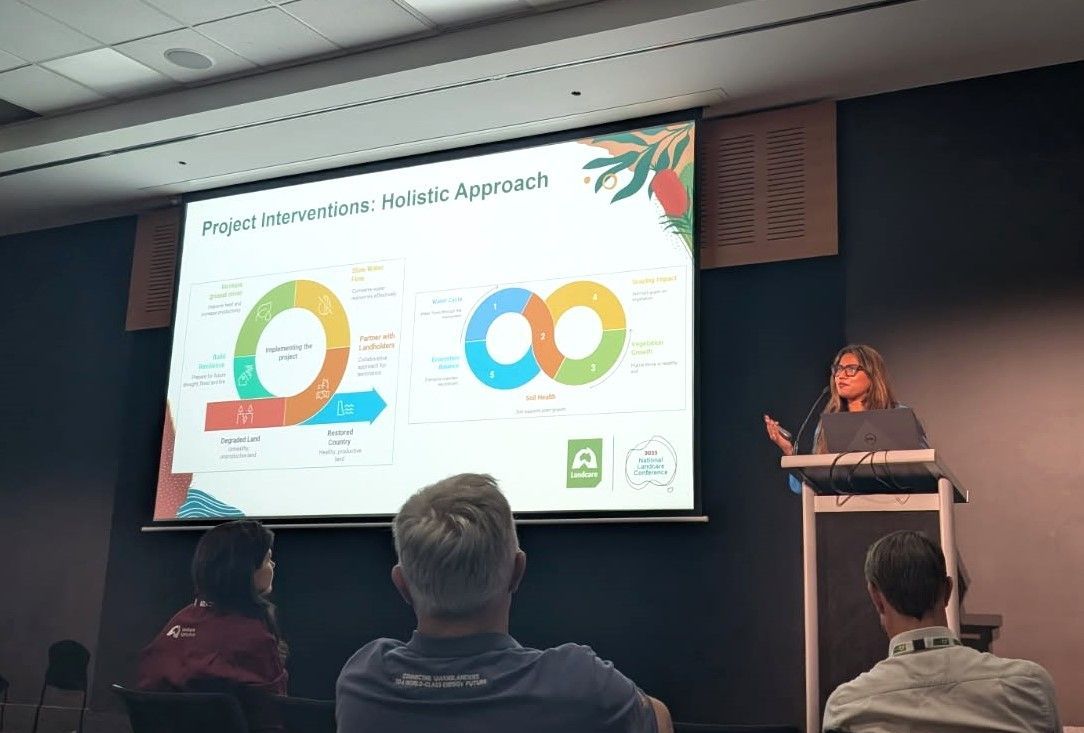
Dr Payel Sinha delivered a presentation on the Natural Resource Recovery Program:A Holistic Approach to Restoring Landscapes , showcasing how integrative, place-based strategies can unite ecological health, cultural values and community resilience.
One of the highlights of our participation was the poster we presented on the Manu Manu Creek Fish Traps at Quilpie, telling the story of Uncle Kevin Collins and the heritage of the Margany People.
Here are some of the poster highlights:
• The fish traps along Manu Manu Creek are estimated to be over 5,000 years old. These sites were integral gathering places for First Nations peoples, especially for catching Gulu (yellowbelly fish).
• The project builds on a cultural heritage agreement made in 2008 between the Margany People and the Tully family landholders to jointly protect and restore the traps.
• Supported by funding from the Queensland Government’s Natural Resources Recovery Program, the project includes activities such as:
- Traditional cool burning
- Water quality monitoring
- Pest management
The project aims to integrate First Nations knowledge, culture, and science with sustainable land management. Margany Elders guide youth involvement in understanding seasonal flows, restoration techniques, and mapping tools (like drone mapping), building capacity and cultural continuity.
As Uncle Kevin shares, “My people have a deep connection with the land and water, the animals and plants. Country is at the heart of our spiritual identity. We have a responsibility to protect not just the physical aspects of our heritage, but also our stories, language and lore.”
This is more than a heritage project, it’s a model of collaboration between Traditional Owners, landholders, youth, and government, aiming for outcomes that respect culture, restore landscapes, and build legacy.